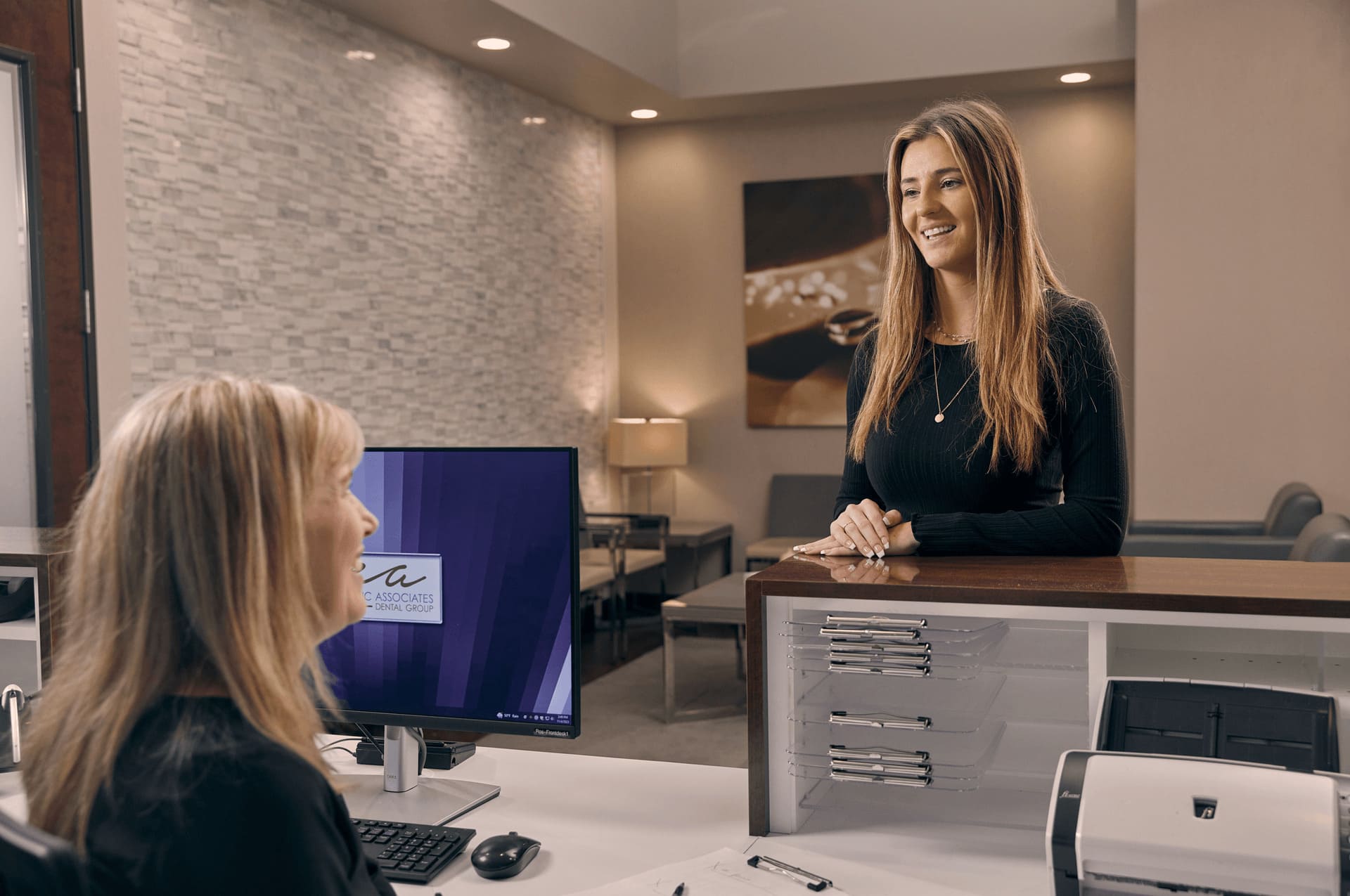
We sat down with two Specialized Dental Partners practice managers, Bianca Harman and Karla Brown from Endo Associates in Sacramento, CA, for their insights on leadership and building strong culture within a specialty dental practice. Here’s what they had to say, including suggestions you as a doctor can take today to strengthen your practice team.
What is dental practice management?
You know that running a successful practice requires far more than an education in dentistry. An array of business knowledge and skills that go well beyond clinical care are necessary to maintain and grow a viable practice. That’s a lot to juggle when your focus as a doctor should be on patient care. You need a team – and that team needs an effective leader!
Partnering with a practice manager you trust, and whose sole focus is the day-to-day operation of your practice, is critical. The right team member can help manage your finances, assist with formulating a plan to treat more patients, streamline your operations by keeping tabs on supply costs, bolster your referral marketing efforts, reduce cancellations and no-shows, and more.
In addition to those important duties, however, the right practice manager can step in and help with something even more important – building a strong culture for your team!
Hiring the right dental practice manager
Managing a dental practice is demanding and requires business savvy, knowledge of clinical procedures and terminology and some technical know-how, but – most importantly – people and leadership skills.
People skills are soft skills, but there are personality traits you should look for when trying to hire a dental practice manager best suited to help you lead your dental practice team. It goes without saying that a positive, friendly attitude will set the tone for the practice environment for your whole team and your patients.
Hiring a dental practice manager means finding a problem-solver. Patient billing problems will arise, scheduling conflicts must be managed, equipment may break, human resources issues are common. The can-do, resourceful attitude of a problem-solver, and the ability to think and act decisively are necessary traits for this leadership role in your practice.
Hiring a dental practice manager also means finding a collaborator. The individual must be someone you can collaborate with, and who approaches the rest of the team with an ability to listen and hear.
Perhaps the greatest soft skill required when hiring a dental practice manager is communication. Dental practice managers must communicate well with you, the rest of the team, vendors, service providers, and most importantly, your patients. Both verbal and written communications skills, as well as the ability to listen and find resolutions to any number of business or patient issues, are essential.
Building a strong dental practice culture
Running a successful practice ultimately stems from building a strong culture. A dental practice manager who has finely honed leadership skills can help you pinpoint what you want it to look like, then help you cultivate it with the rest of your team.
Allowing your practice manager and other teammates who are keen on personal and professional growth to participate in leadership training can be a positive step forward. Specialized Dental Partners, for instance, offers leadership training at multiple levels within its practice network, including the opportunity to learn with practice manager peers in the same region.
Among other important lessons, good leadership training will guide your practice manager and team to help define a clear mission, vision, and core values for your group if they don’t already exist. They can take time to develop, but these points can serve as a powerful touchstone for your team.
After you have a strong set of guiding points, the practice manager can lead on by presenting them to other teammates to gain a deep understanding and buy-in of the “why” that drives the day-to-day practice operations and how they can be the embodiment of them.
It’s important to find a time to meet with your teammates on a regular basis in groups large and small to keep your mission, vision, and core values top-of-mind. While it sounds like a lot to manage, a practice of any size can schedule meetings quarterly with the clinical team, the admin team, the leadership team, and the full team. Regular gatherings provide a forum and enough time to adequately cover topics that might otherwise be put on the back burner due to busyness in the practice. Allow your dental practice manager to lead some or all the meetings so that other teammates can see the trust that has been placed in them.
While the meetings can cover specific topics, it’s also a good idea to use the time for opening the lines of communication with your team. Your practice manager might simply ask, “What’s important to you?” or “What can we do to make this a great place to work?” When teammates can comfortably voice their opinions and feel heard, it builds trust amongst the group, which will be reflected in the way they work together to help the practice operate and grow, and to care for patients.
To continue to keep your mission, vision, and core values at the forefront, consider instituting a “Be Kind Campaign” where teammates are encouraging to call out their peers for doing the right things. It can be as simple as printing fun post-it notes (photo of this) so they can be left on desks or lockers with kudos or for inspiration.
Recognition at team meetings can also serve as another positive motivator. By simply acknowledging an administrative teammate and a clinical teammate with an award for living out a specific core value, others can gain a better understanding of what that value looks like in practice and commit to making positive changes during the next period so they, too, can be recognized.
A best practice you can adopt tomorrow for positive change: Team Huddles
Success requires great communication and collaboration between all practice teammates. One of the best ways to accomplish this is by starting every morning with a team huddle. Well-communicated priorities and concerns and follow-through by the practice manager and team creates freedom for you, the clinician, to concentrate on patients.
Huddles discussions should include any patient concerns and the schedule for that day, plus any special requests the doctors might have, like taking additional CBCTs before they enter the operatory. Additionally, teams may discuss a case goal for the day, week or month, plus an update on progress and how the current day will affect it.
Teammates feel included when case goals are discussed in this forum because they’re not just being told what to do – they understand why the goal is important. This understanding helps them make good decisions throughout the day about how to best use the time from schedule openings that pop up due to cancellations.
“Our teammates see a huge change since adopting our mission, vision and core values. They come to us regularly and acknowledge us for our efforts in creating a positive culture. Our doctors have also reported that they feel like there’s new life in the practice and appreciate how much work has gone into the shift.”
Team members can use the huddle to communicate various needs they might have throughout the day or to report and follow up on something that they noticed the day before. Additionally, if something important has changed within the policy or structure of the practice, it’s communicated face-to-face, not just in an email, so it’s clear that everyone understands.
Huddles are even more important in larger practices with multiple locations, especially if some teammates shift from place to place. It’s a great way to streamline communication and make sure that everyone remains on the same page about practice procedures – there is less room for error and ensures that there is uniformity in patient care across locations. Team members can walk into any location and jump right in to do their jobs.
Huddles open the lines for future communication, as well. Teammates quickly become comfortable speaking to, and in front of, the rest of the team, including the doctors. Because they are more confident and empowered to share in the huddle, they do so throughout the day – the result is a positive practice environment where everyone feels heard and respected.
And daily huddles don’t have to be all business – they can be a forum to inject some positivity into the day before patients start coming through the door! Scheduling time for a “Ray of the Day” is a fun way to let teammates bring to the table a positive quote, saying or song to share with their colleagues to start the day on the right note.
Special thanks to Karla Brown and Bianca Harman, Practice Managers at Endodontic Associates Dental Group in Sacramento, CA, for their contribution to this article.